Imagine you go to the doctor with a headache and, without asking you anything or doing any tests, they just prescribe medication. It might do something. But it's also likely that it's not what you really need.
That's exactly what happens when a professional applies a hair protocol without first conducting an analysis. The results may be acceptable. But they will never be as precise, effective, or differentiated as when the treatment is based on a true understanding of what's happening in that person's scalp and hair fiber.
Hair analysis is the foundation of professional hair therapy. And yet, it remains one of the most underutilized tools in the industry.
What is the hair analysis?
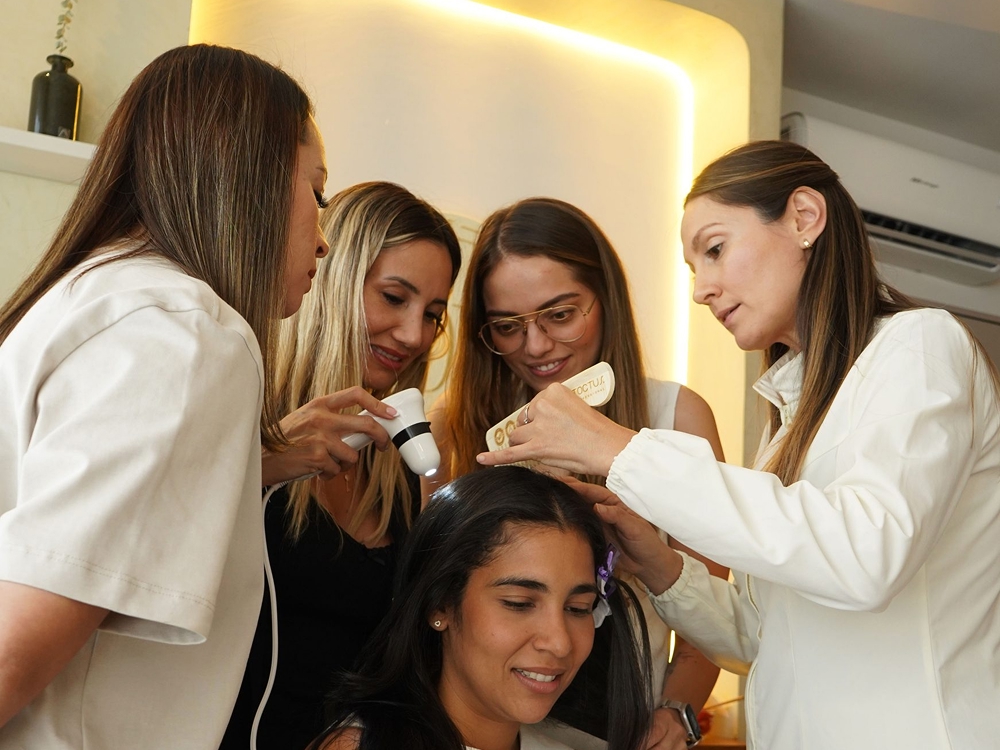
Hair analysis is the process by which a hair therapist systematically evaluates the condition of the scalp, hair fiber, and hair density to obtain accurate information to guide treatment decisions.
It's not just about looking at the hair. It's about reading it. It's about interpreting what the scalp is communicating: its signs of inflammation, its imbalances, its hydration level, the state of its skin barrier, the health of the follicle.
And it's also about listening to the client: understanding their exposome—the environmental factors that affect their hair health—, their habits, their stress level, their background, and their goals.
What is evaluated in a complete hair analysis?
A professional hair analysis covers three main dimensions:
The scalp
- Oil level and sebum regulation
- Signs of dysbiosis and inflammation
- Skin sensitivity and reactivity
- Skin barrier status
- Presence of dandruff, flaking, or visible alterations
The hair fiber
- Porosity: how hair absorbs and retains moisture
- Hydration and elasticity level
- Accumulated thermal and chemical damage
- Texture, shine and resistance
Hair density and cycle
- Progressive thinning of hair diameter
- Amount of hair in the shedding phase
- Scalp density distribution
From sign to plan: the logic of professional hair analysis
What distinguishes a professional hair analysis from a simple observation is the chain of reasoning that is activated: sign → symptom → cause → decision.
Seeing an oily scalp isn't enough. The professional hair therapist asks: Is the excess sebum due to overproduction? To excessive use of products? To dehydration of the skin barrier that the body is trying to compensate for? The answer completely changes the treatment protocol.
This level of analysis is what transforms a hair professional into a hair therapist: someone who doesn't apply generic formulas, but makes informed decisions for each person.
The role of technology in the modern hair analysis
Traditional hair analysis was done by eye and touch. Today, technology has greatly expanded the observational capabilities and precision of professionals.
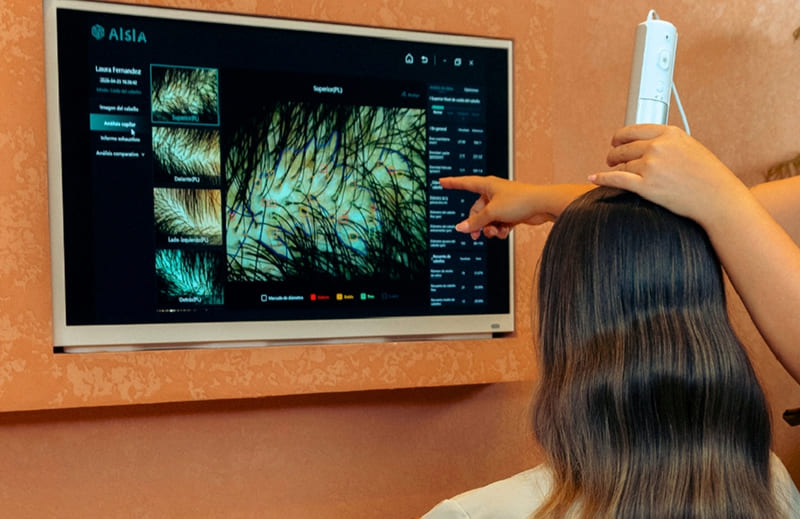
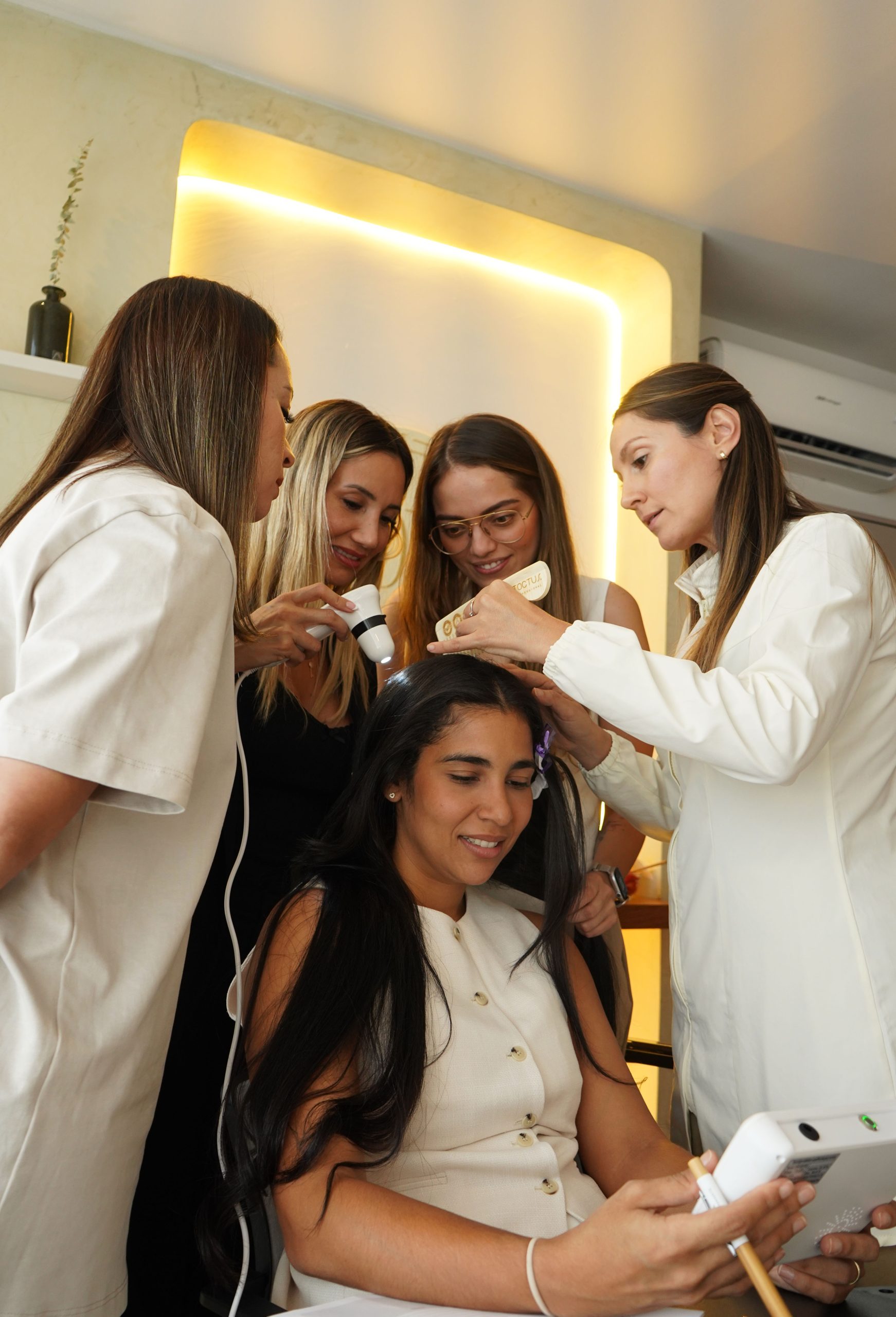
The trichoscope—a microcamera that magnifies the scalp—allows for a detailed view of the condition of the follicles, hair diameter, sebum levels, and signs of inflammation that are invisible to the naked eye. Combined with the therapist's clinical judgment, it is a very powerful diagnostic tool.
But what's opening a new dimension in hair analysis is artificial intelligence. In the Ava Lyen® Method, we've integrated the use of AI as an analytical tool: it allows us to process scalp images with greater precision, identify patterns, and generate 360° hair analysis maps that become the basis of a personalized treatment plan.
Technology does not replace the therapist. It enhances their analytical skills and makes their decisions more accurate, faster, and easier to communicate to the client.
Why hair analysis is also a business tool
There's something that professionals who perform hair analysis know well: when clients understand their condition, they're much more willing to commit to the treatment. And when they understand why each recommendation is made, they have more confidence in the therapist's judgment.
Hair analysis is not just a clinical tool. It's a communication and value-selling tool. It transforms a consultation into a trustworthy experience and turns a service into a meaningful therapeutic plan.
In the Ava Lyen® Method we work on hair analysis with the Ava Lyen® Anamnesis Form (Pro Level), an instrument that goes far beyond basic questions: it includes reading the client's exposome, their sleep habits, diet, stress level, history of chemical processes and everything that may be influencing the condition of their scalp and hair.
Because the first step in any treatment that truly works isn't the product. It's understanding the person.
How to start incorporating hair analysis into your practice
- It includes a basic anamnesis form that collects the client's history, habits, and objectives before each service.
- Observe the scalp systematically: color, texture, sebum distribution, signs of irritation or inflammation.
- Evaluate the hair fiber: test for elasticity, porosity, and resistance.
- Always relate what you observe to the client's medical history.
- Use amplification tools when available, and document findings to track over time.
Hair analysis is a skill that develops with practice and training. The more you incorporate it as a starting point, the harder it will be for any competitor to match you.